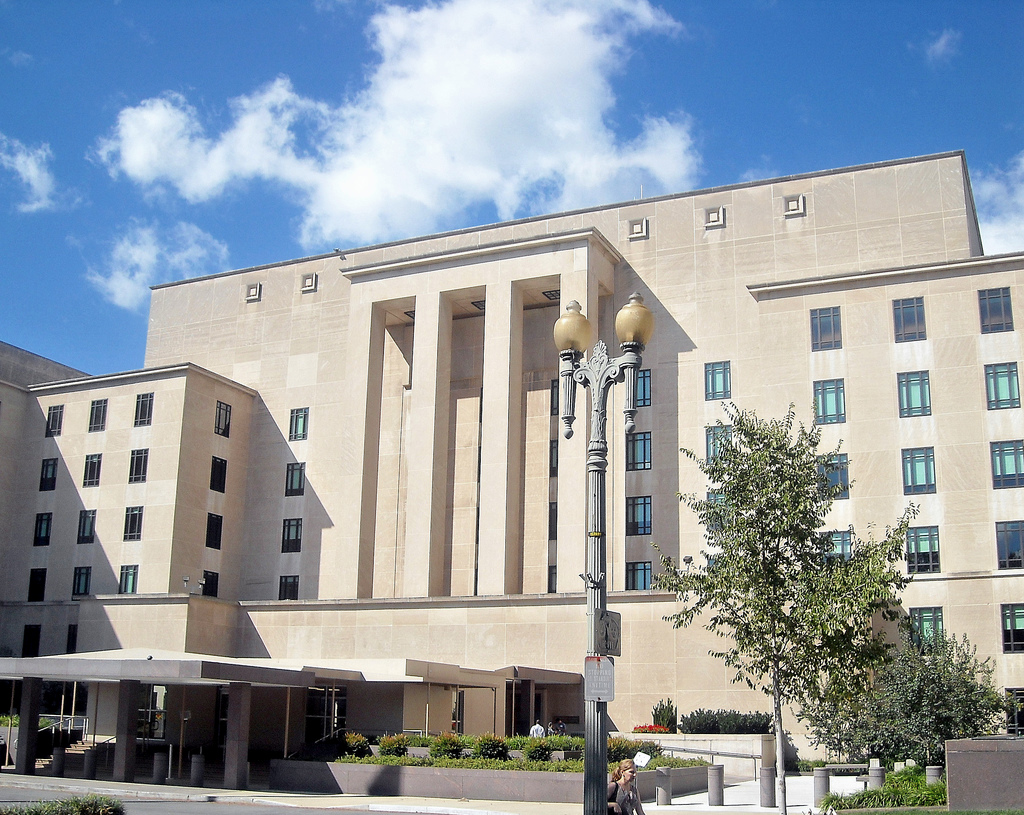
Israel joins the US Pax Silica Initiative at an international conference in Washington, alongside the United States, Japan, South Korea, Singapore, the Netherlands, the United Kingdom, the United Arab Emirates and Australia.
Representing the State of Israel at the conference, at the directive of Prime Minister Benjamin Netanyahu, were National Economic Council Director and Economic Advisor to the Prime Minister, Prof. Avi Simhon, along with the Chief Economist at the Finance Ministry, Dr. Shmuel Abramson, and Head of the National AI Directorate, Erez Askal.
"Israel's joining of the US-led Pax Silica Initiative is a badge of honor for the State of Israel and the Israeli high-tech industry, which is considered a global leader in innovation and Artificial Intelligence," Simhon said. "Together with our international partners, we are working to fortify the global AI industry, strengthen the resilience of supply chains, and ensure the economic and security prosperity of the participating countries and their citizens."
Pax Silica is a U.S.-led strategic initiative to build a secure, prosperous, and innovation driven silicon supply chain—from critical minerals and energy inputs to advanced manufacturing, semiconductors, AI infrastructure, and logistics.
Rooted in deep cooperation with trusted partners, Pax Silica aims to reduce coercive dependencies, protect the materials and capabilities foundational to artificial intelligence, and ensure aligned nations can develop and deploy transformative technologies at scale.
Pax Silica is a positive-sum partnership. It is not about isolating others—but about coordinating with partners who want to remain competitive and prosperous.
Across the United States and partner nations, a clear consensus has emerged: secure supply chains, trusted technology, and resilient infrastructure are indispensable to national power and economic growth.
The initiative responds to:
Countries will partner on securing strategic stacks of the global technology supply chain, including, but not limited to: software applications and platforms, frontier foundation models, information connectivity and network infrastructure, compute and semiconductors, advanced manufacturing, transportation logistics, minerals refining and processing, and energy.
Countries affirmed a shared commitment to:
Representing the State of Israel at the conference, at the directive of Prime Minister Benjamin Netanyahu, were National Economic Council Director and Economic Advisor to the Prime Minister, Prof. Avi Simhon, along with the Chief Economist at the Finance Ministry, Dr. Shmuel Abramson, and Head of the National AI Directorate, Erez Askal.
"Israel's joining of the US-led Pax Silica Initiative is a badge of honor for the State of Israel and the Israeli high-tech industry, which is considered a global leader in innovation and Artificial Intelligence," Simhon said. "Together with our international partners, we are working to fortify the global AI industry, strengthen the resilience of supply chains, and ensure the economic and security prosperity of the participating countries and their citizens."
Pax Silica is a U.S.-led strategic initiative to build a secure, prosperous, and innovation driven silicon supply chain—from critical minerals and energy inputs to advanced manufacturing, semiconductors, AI infrastructure, and logistics.
Rooted in deep cooperation with trusted partners, Pax Silica aims to reduce coercive dependencies, protect the materials and capabilities foundational to artificial intelligence, and ensure aligned nations can develop and deploy transformative technologies at scale.
Pax Silica is a positive-sum partnership. It is not about isolating others—but about coordinating with partners who want to remain competitive and prosperous.
Across the United States and partner nations, a clear consensus has emerged: secure supply chains, trusted technology, and resilient infrastructure are indispensable to national power and economic growth.
The initiative responds to:
- Growing demand from partners to deepen economic and technology cooperation with the United States.
- The understanding that AI represents a transformative force for our long-term prosperity.
- Recognition that trustworthy systems are essential for safeguarding our mutual security and prosperity.
- Increasing risks from coercive dependencies.
- The importance of fair market practices and policy coordination to protect sensitive technologies and critical infrastructure.
Countries will partner on securing strategic stacks of the global technology supply chain, including, but not limited to: software applications and platforms, frontier foundation models, information connectivity and network infrastructure, compute and semiconductors, advanced manufacturing, transportation logistics, minerals refining and processing, and energy.
Countries affirmed a shared commitment to:
- Pursue projects to jointly address AI supply chain opportunities and vulnerabilities in: priority critical minerals. semiconductor design, fabrication, and packaging, logistics and transportation, compute, and energy grids and power generation.
- Pursue new joint ventures and strategic co-investment opportunities.
- Protect sensitive technologies and critical infrastructure from undue access or control by countries of concern.
- Build trusted technology ecosystems, including ICT systems, fiber-optic cables, data centers, foundational models and applications.